Graphite Shaft
- Lightweight
- Increased Distance
- Vibration Dampening
- Customization
Trade-off — weaker feedback and consistency than metal

Our proprietary Carbon Metal Material is an aerospace-grade Fiber Metal Laminate technology that integrates carbon fiber with metal layers roughly 1/20th of a human hair — delivering enhanced strength, solid impact feedback, metal-like stability, and consistent performance.
Developed through more than a decade of R&D investment, this breakthrough material overcomes interlayer peeling between carbon fiber and metal, creating a stable and durable hybrid composite structure.
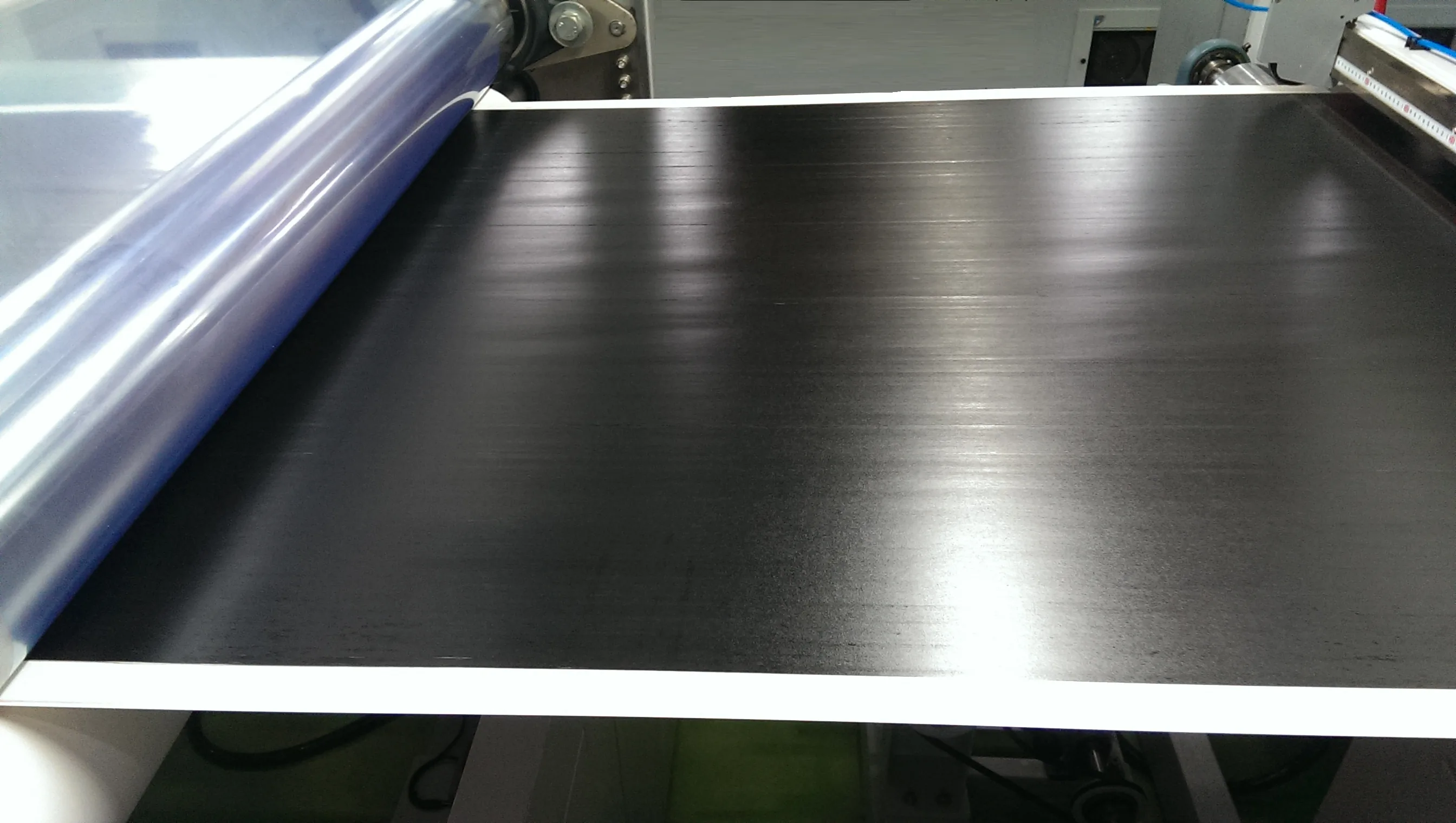
Material Comparison
Carbon fiber engineered for explosive speed; metal micro-layers forged for pinpoint stability. XFIBURST integrates both into a single, high-performance shaft.
Trade-off — weaker feedback and consistency than metal
Trade-off — heavier, costing swing speed
By fusing carbon fiber with metal, the Carbon Metal Shaft balances the lightness of graphite with the durability and consistency of metal — delivering greater distance, better accuracy and a more solid, connected feel.
At a Glance
Indexed, relative values — the shape tells the story. Graphite flies light and far; metal is stable and solid; Carbon Metal holds a high, even balance across every axis.
Indexed for comparison only — not measured specifications.
Engineering Challenges
Fusing carbon fiber with metal into one shaft meant overcoming two failures that defeat conventional fiber-metal laminates — making the fiber thin and uniform enough to stack, and stopping the layers from peeling apart under load.
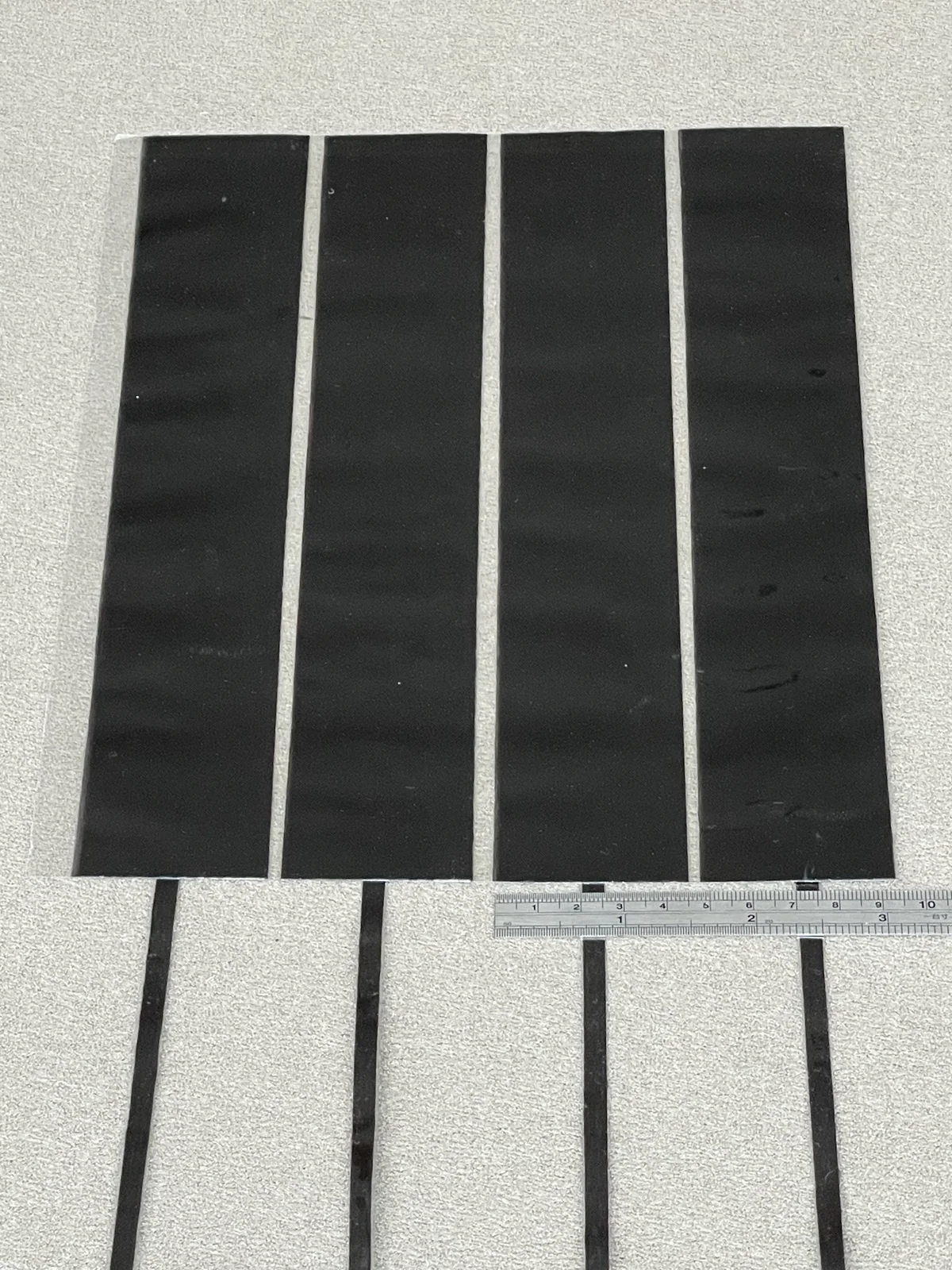 40 mm
5 mm
40 mm
5 mm
Challenge 01
A raw carbon tow is too thick and uneven to stack into a precise, lightweight wall. Our answer: open each tow from its original 5 mm width up to 40 mm, spreading the bundle into an ultra-thin, uniform sheet of perfectly aligned filaments.
As the spread width increases, fiber areal weight (FAW) drops sharply — letting us stack more, thinner, evenly distributed plies for a lighter wall, more consistent strength, and finer control over flex and torque.
| Spread Width (12K) | FAW (24T) | FAW (30·40·46T) |
|---|---|---|
| 5 mm (Original) | 160 g/m² | 88 g/m² |
| 8 mm | 100 g/m² | 55 g/m² |
| 10 mm | 80 g/m² | 45 g/m² |
| 16 mm | 50 g/m² | 28 g/m² |
| 20 mm | 40 g/m² | 22 g/m² |
| 40 mm | 20 g/m² | 11 g/m² |
FAW — fiber areal weight, g/m². Lower is thinner and more uniform.
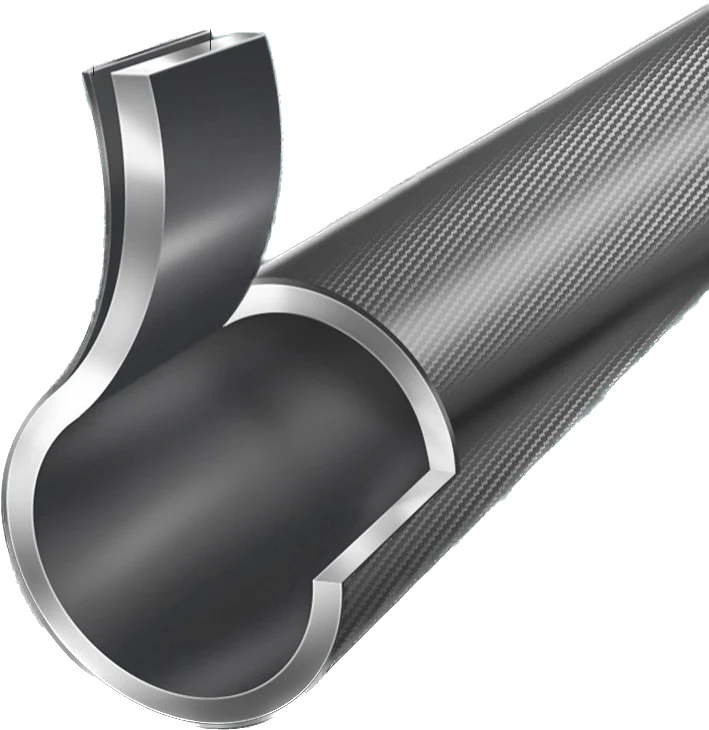 Interlayer Peeling
Challenge 02
In metal layers roughly 1/20th of a human hair, the volume change is extremely small. Consequently, the interlaminar shear stress induced by the volume change between the carbon fiber layers and the metal layers is also minimal.
This effectively mitigates interlaminar delamination at the interface between the carbon fiber layers and the metal layers, which occurs due to the contact of two different materials.
In contrast, thick metal materials fail to resolve the interlaminar delamination problem at the contact interface.